Unit 211, 1865 Osler St., Regina, SK, Canada S4P 1W1
Floating Platforms · Patent Pending

Build on the Water. Skip the Land Cost.

The Green Energy Machine (GEM) is a modular floating platform built from a split octet-truss space frame. Land is often the most expensive part of a home. The GEM puts housing and workspace on rivers, lakes and sheltered coastline, where the lot is free.
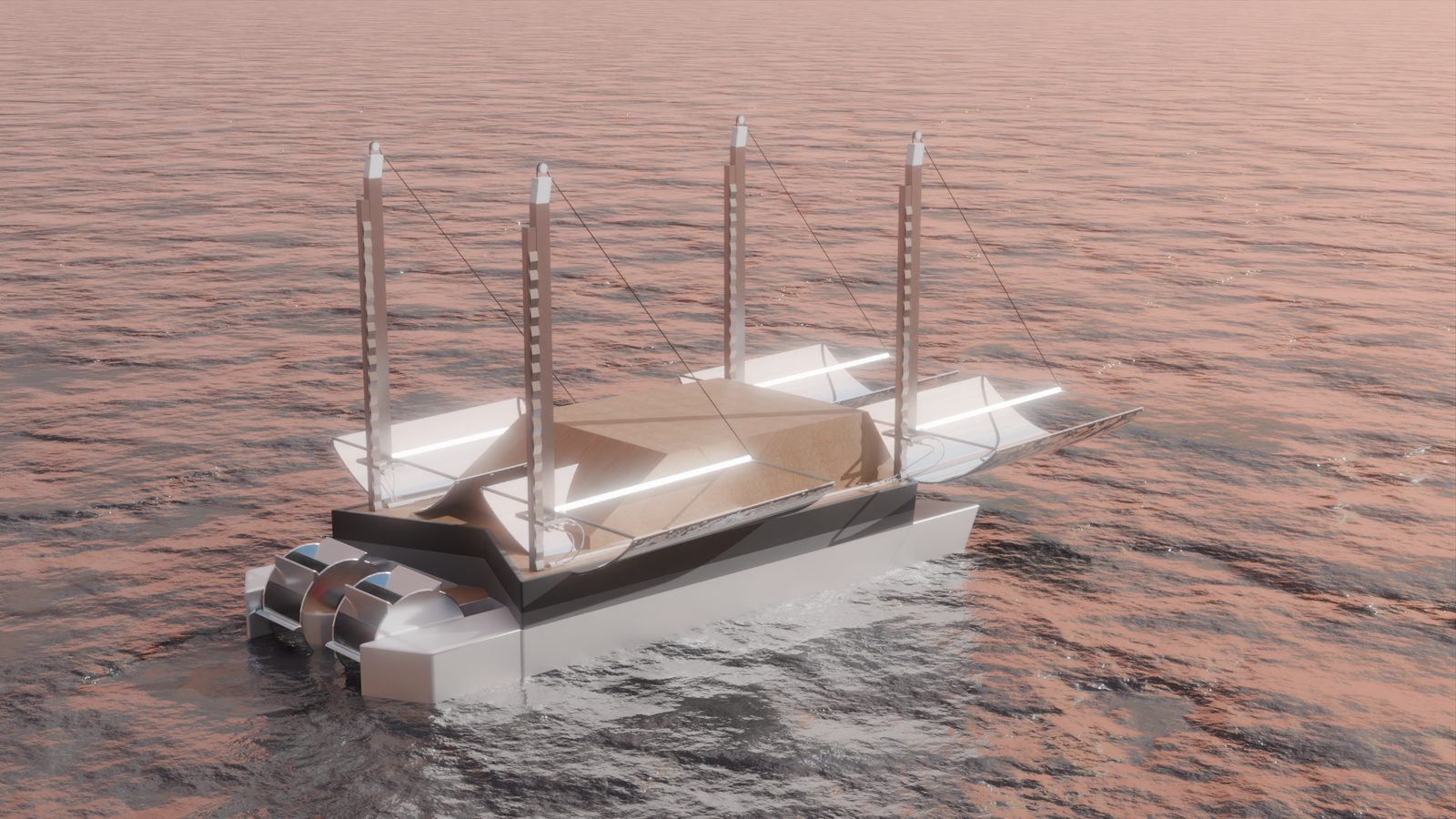
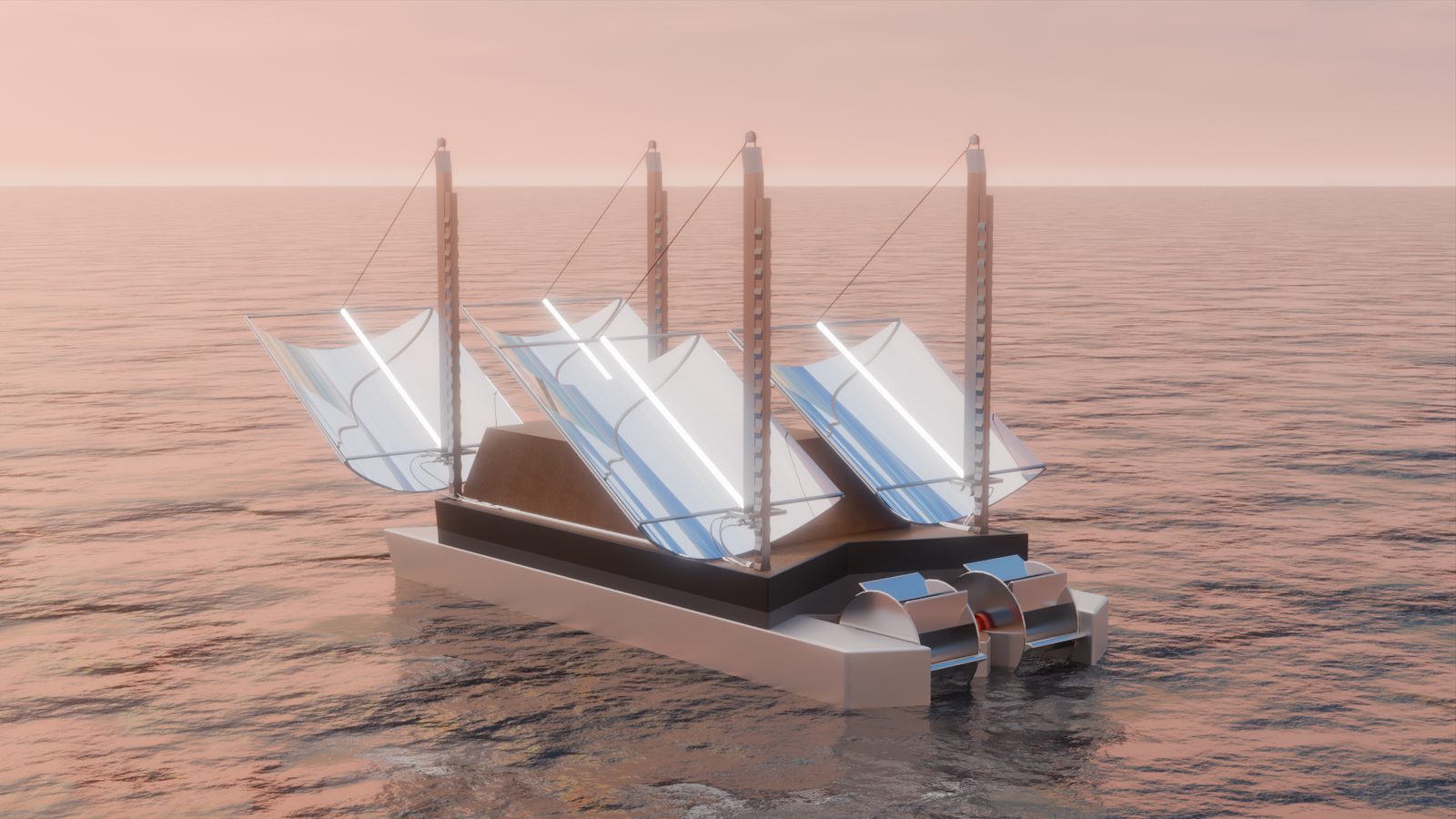
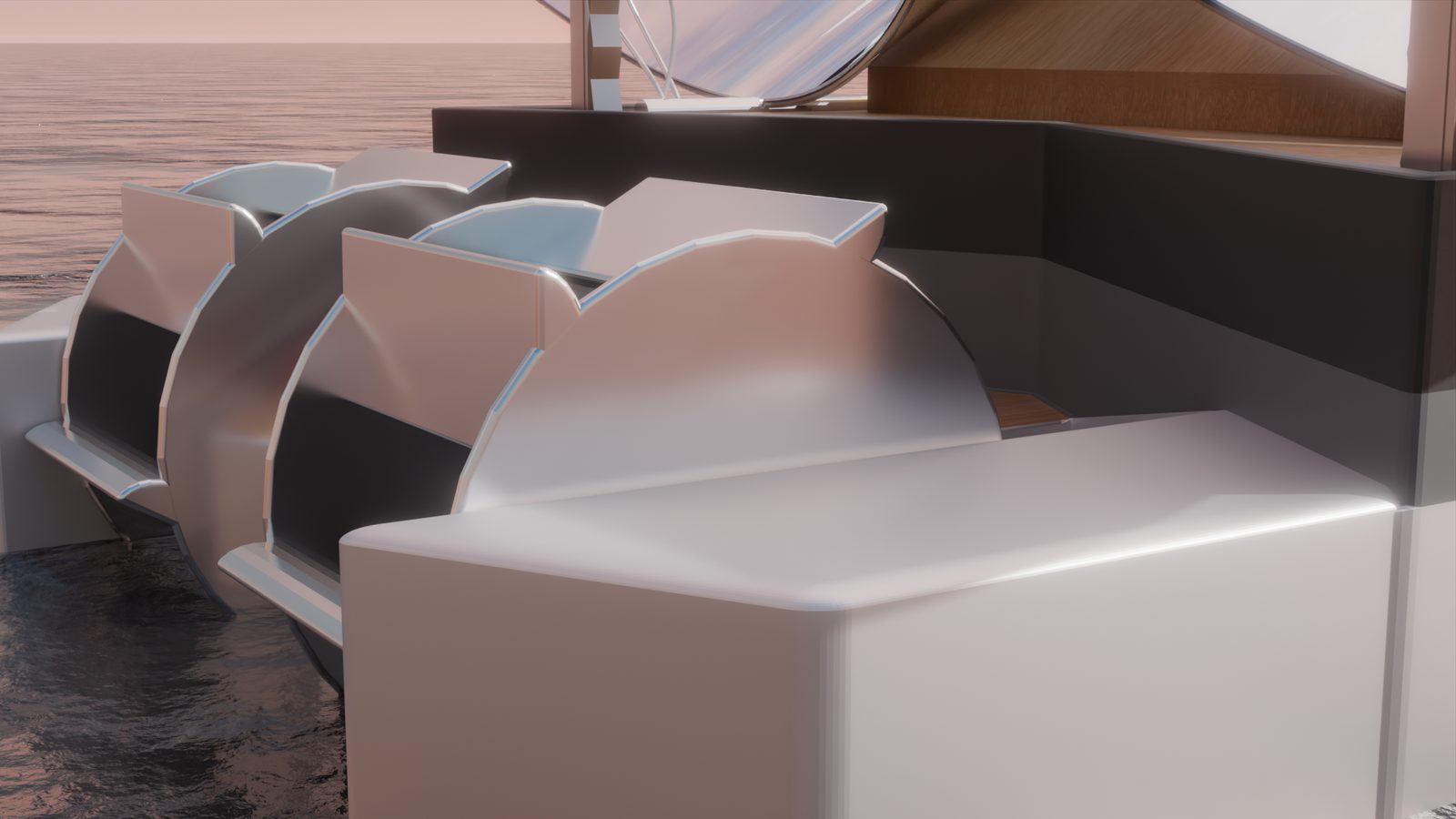
GEM concept renderConcept render — twin water wheels astern
Affordable Housing Without the Land Bill

The cost of land, not the cost of the building, is what prices many families out.

01

No lot to buy

A floating structure sits on water rather than on purchased ground. The largest single line in many housing budgets simply goes away.

02

Built from simple parts

The frame is assembled from repeating truss members and flat panels that fold from a common pattern. Workshop tooling is enough; no expensive custom moulds.

03

Modular and movable

Units can be built in a yard, towed to a site, anchored, joined to neighbours, and moved again as needs change.

The key idea: a lightweight, rigid space frame doubles as the hull. The same structure that carries the living space also provides the buoyancy and stiffness, so the platform stays simple and affordable to build.

A Space Frame That Floats

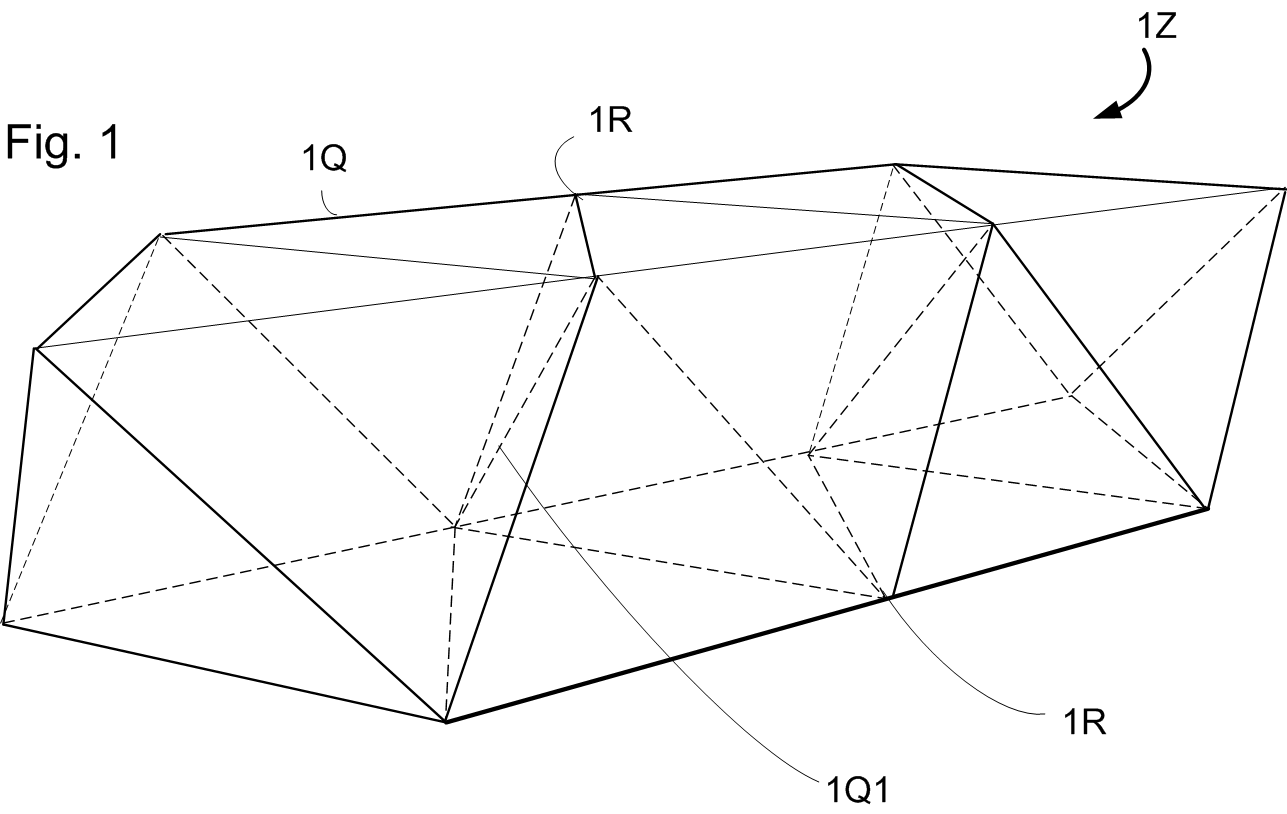
The platform starts as an octet truss, one of the stiffest lightweight structures known, then is split into simple hull shapes.

Structure

Split octet-truss hulls

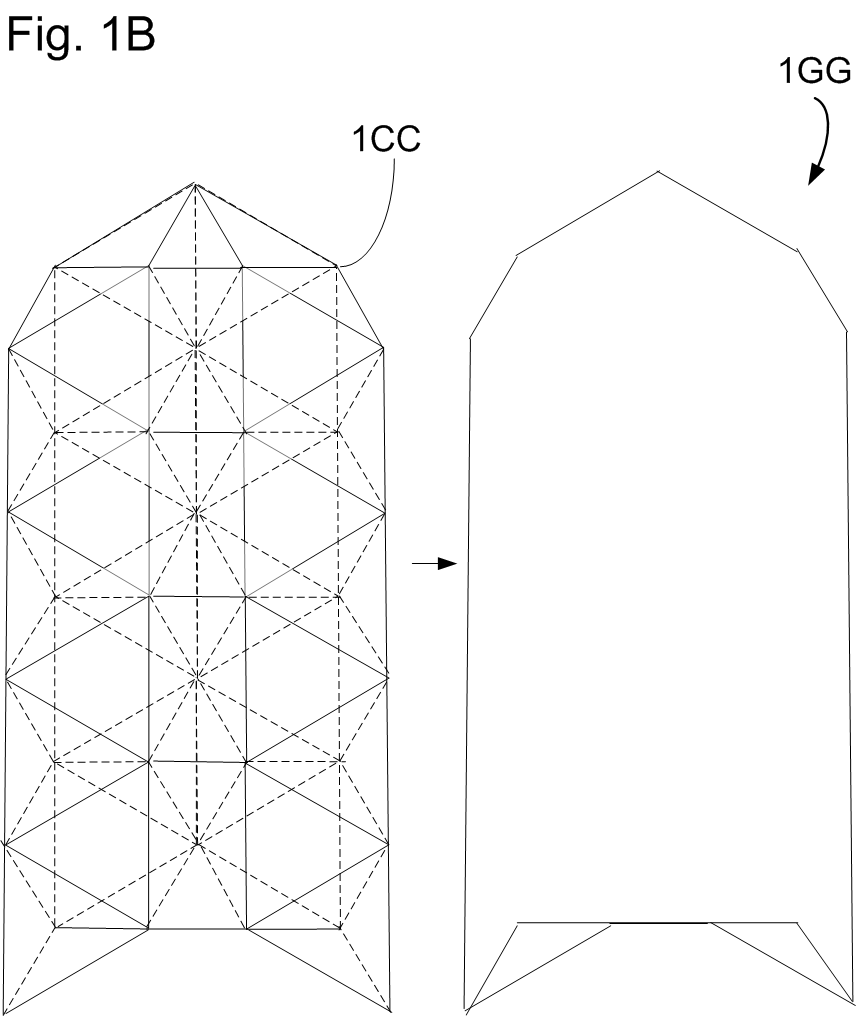
Octet-truss geometry gives high strength for very little material. Splitting it along planes produces hull shapes that can be skinned and made watertight, and joined into trimaran or catamaran layouts that carry a deck and living space.

  • Repeating members: the same struts and nodes, over and over.
  • Flat-pack panels: hull panels are cut flat and assembled, as in Fig. 1B.
  • Scalable: add truss layers for a larger or stiffer platform.
Fig. 1: Split octet-truss hullFig. 1: Split octet-truss hull
Stability

Anchored by its own legs

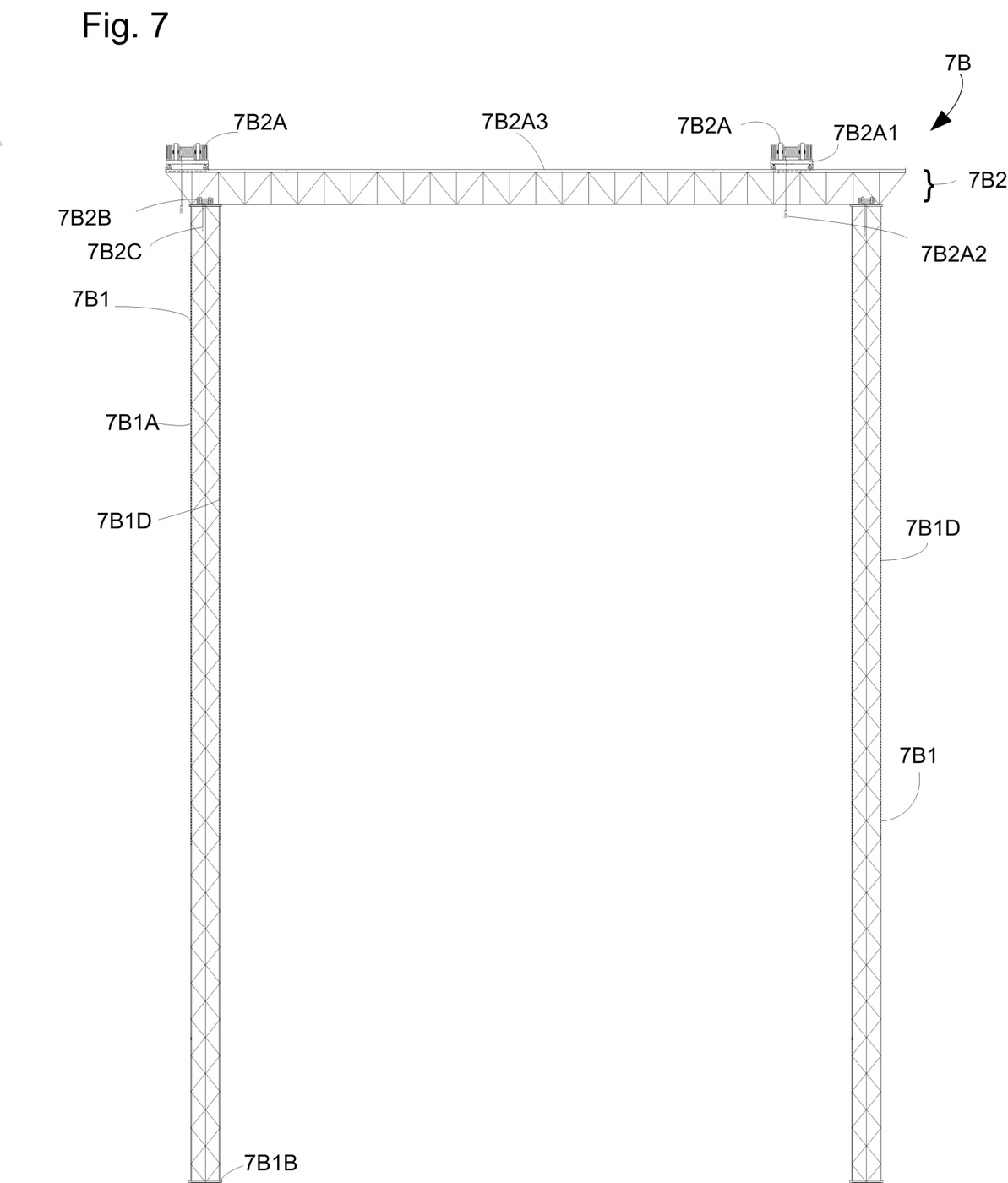
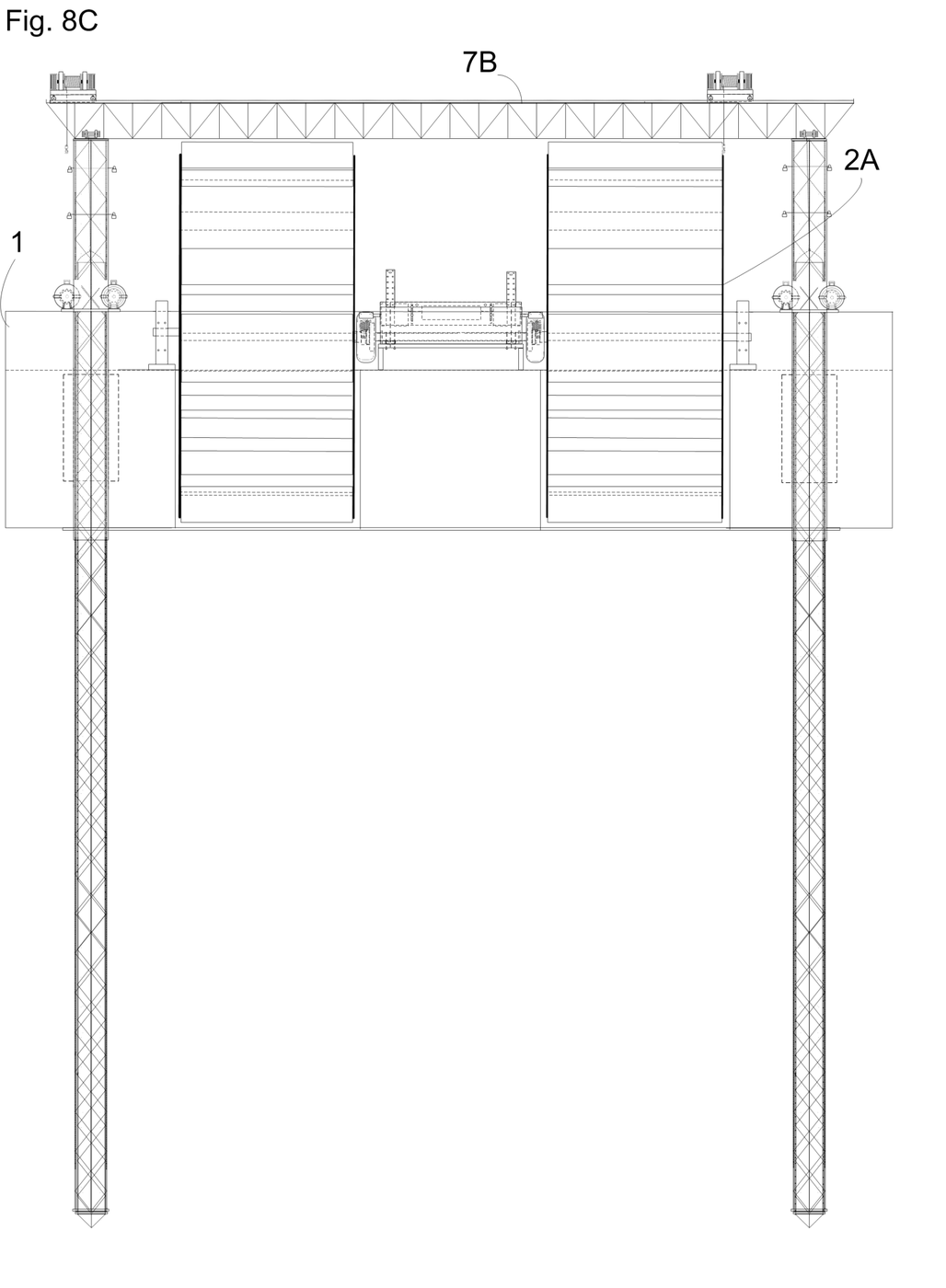
Telescoping mast/anchor legs pass through the hull. Raised, they carry sails and collectors. Lowered, they reach the riverbed or seabed and hold the platform steady.

  • Holds station: a platform that stays where you put it.
  • Multi-purpose: the same legs serve as masts and anchors.
Fig. 7: Mast/anchor frameFig. 7: Mast/anchor frame

Built in a Workshop, Not a Shipyard

The construction method is as important as the shape. It was designed so that two capable people with ordinary tools can build it.

01

Flat truss sections

The frame starts as identical flat truss sections, welded together on a simple jig laid out on a long level surface. Nearly every strut is the same length, so there is little to measure and little to get wrong. Sections of about 12 metres can be handled by two people.

02

A steel skin and built-in bulkheads

The flat faces of the split octet truss take sheet steel directly. The same sheets welded across the frame make strong, watertight compartments, so the bulkheads add to the strength of the structure.

03

Grow it by adding modules

Welding makes it easy to add truss layers or whole modules later. A first unit can be modest, then extended into a larger platform as needs or budgets grow.

Forgiving by design: the structure does not need to be perfect. Each joint has more material than any single strut, and small leaks in the skin do not threaten the structure. That tolerance is what keeps the cost down.

Energy Is the Bonus, Not the Requirement

A GEM does not need every harvesting system. Builders can add only the ones that suit the site.

Easiest first module

Flowing water and wave harvesting

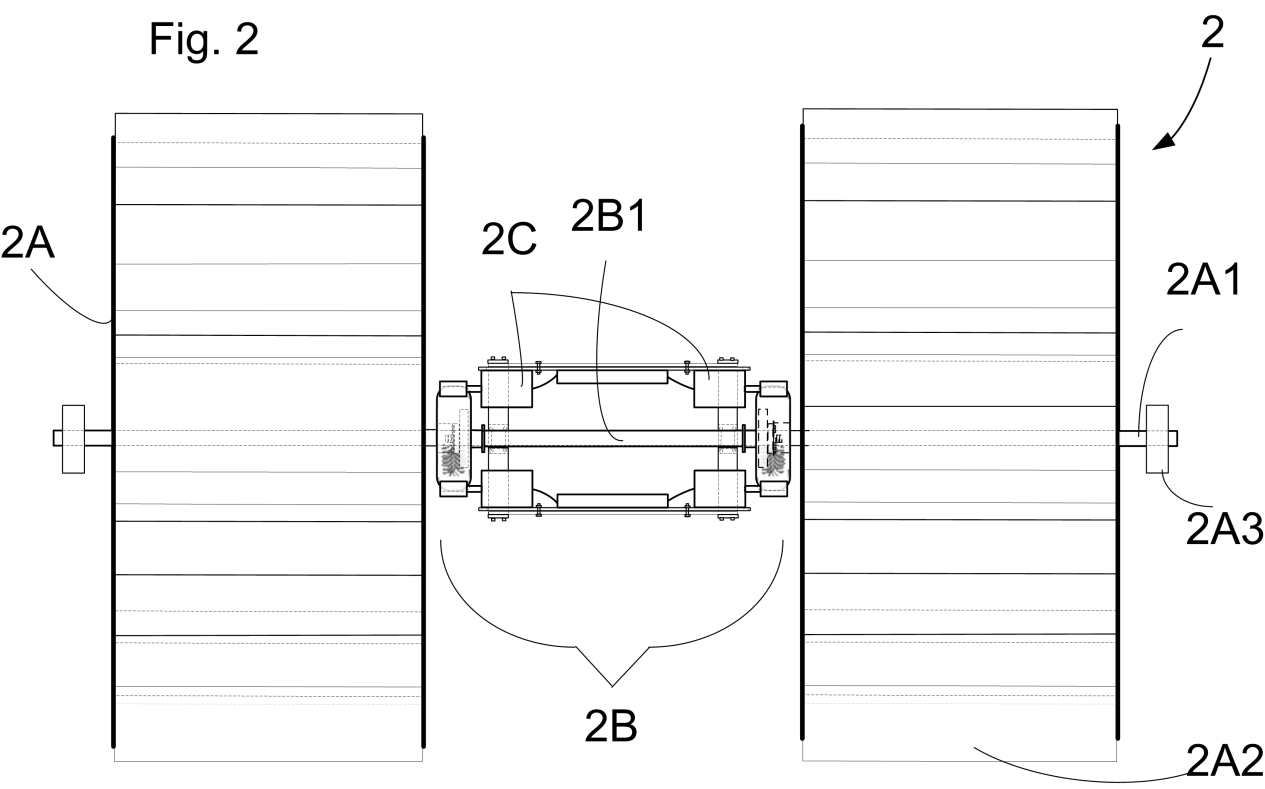
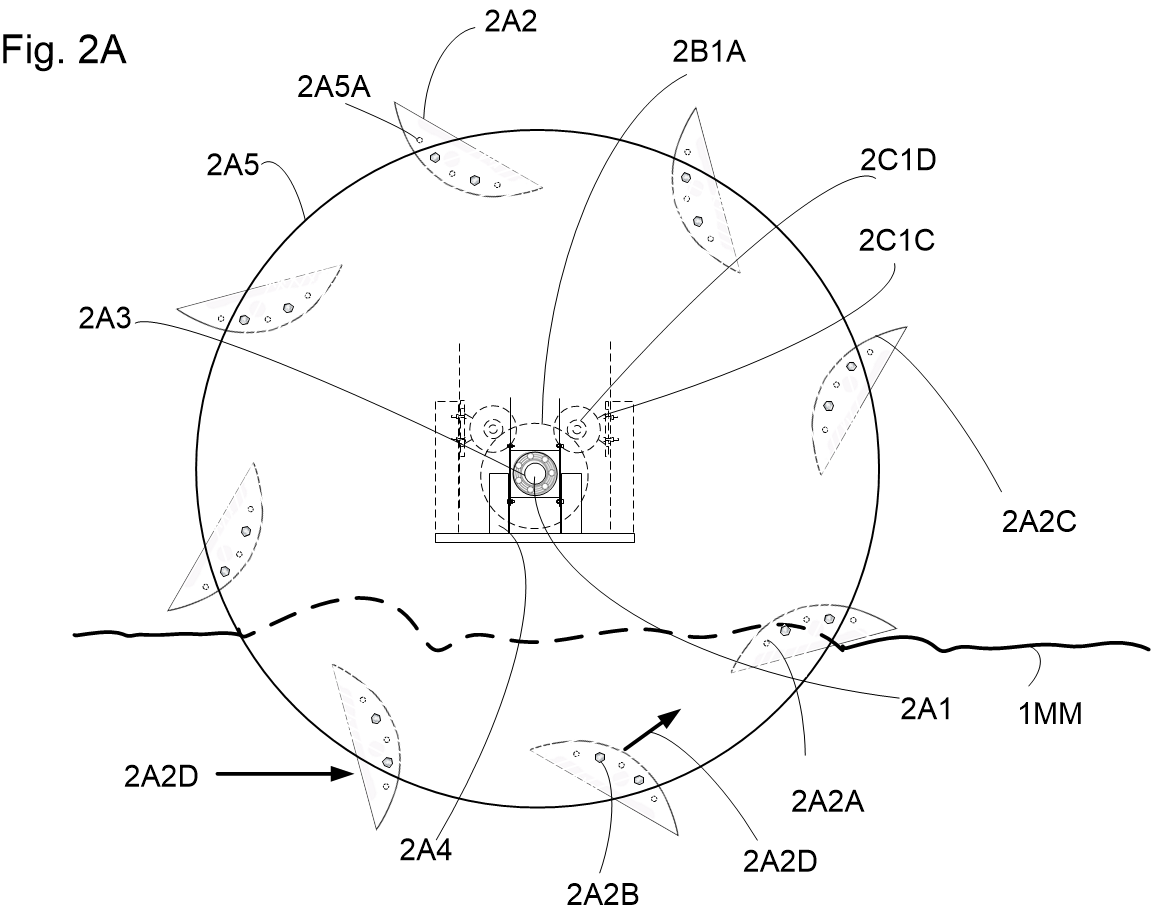
Think of the GEM as a combine harvester for the water: it moves to where the energy is and harvests it. Two large paddle-wheel rotors with adjustable concave blades sit on a shared axle between the hulls. Flowing water or passing waves turn them, and a vehicle-style axle and generator set turn that rotation into electricity.

  • Low-tech: relies on proven mechanical parts, such as axles, gearing and generators.
  • Round-the-clock where water moves: rivers, tidal streams and wave-exposed sites keep turning when the sun is down.
  • Powers the platform: a natural way to supply the homes and workspaces aboard.
Fig. 2: Twin water-wheel generatorFig. 2: Twin water-wheel generator
How it works

Blades that catch current and waves

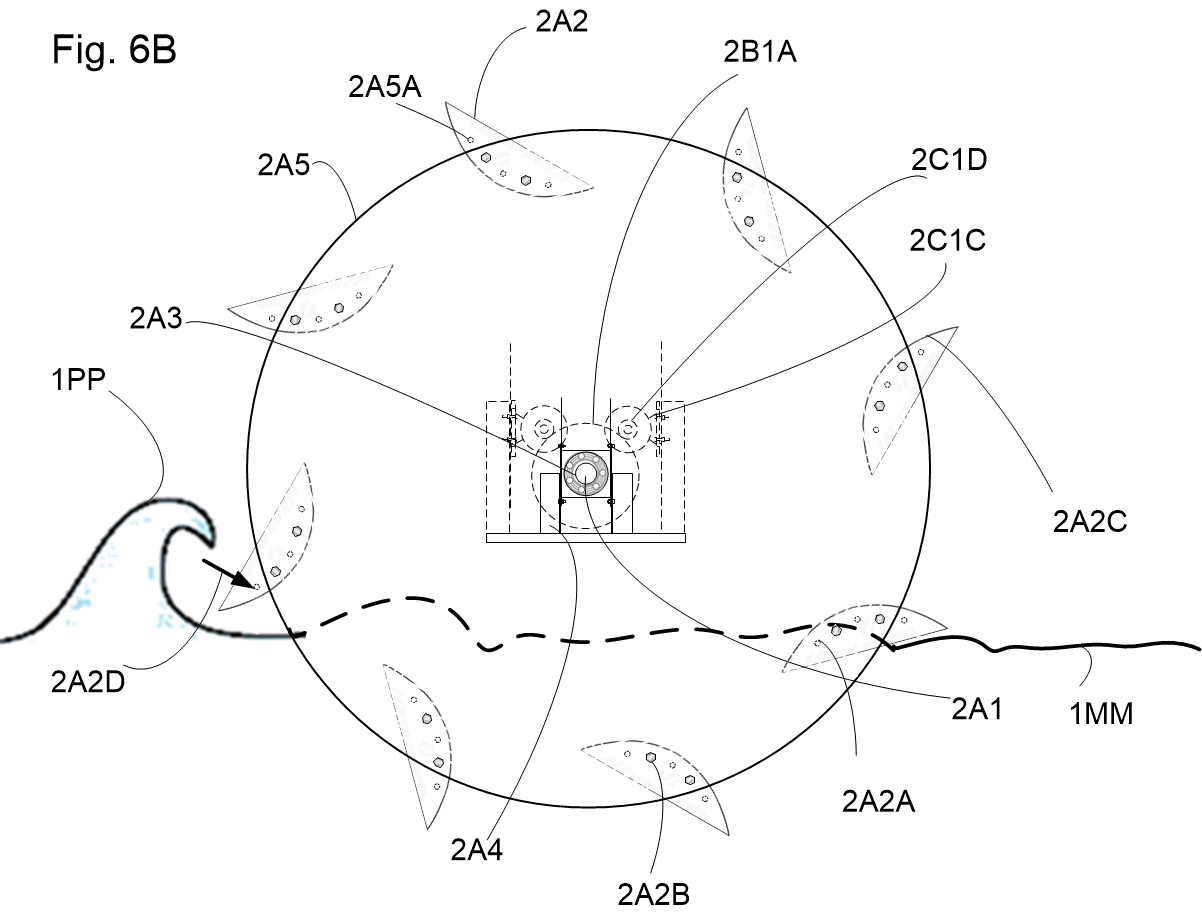
Blade angles can be adjusted, so the rotor can work in a steady current or in the surge of waves. The drawings show a breaking wave driving the blades at the waterline.

Fig. 6B: Wave powerFig. 6B: Wave power
Optional add-ons: the same frame can also carry solar-thermal parabolic sails and wind-catching surfaces. They share the masts and the structure, but they are extras. The platform makes sense without them.

Making Ordinary Water Worth Harvesting

The hulls are designed to do more than float.

01

Hulls as a funnel

The twin hulls and adjustable drawbridge-style gates (“wicket gates”) narrow the water as it approaches the wheel. Narrowing a stream speeds it up, and the power in moving water rises with the cube of its speed, so a modest current can become a useful one.

02

A wheel that rests half the time

Only half of the water wheel is in the water at any moment. On the return half of each turn it is out in the air, where drag is far lower, so little of the energy gained is lost.

03

Torque, not speed

Water is far denser than air, so a slow-turning wheel can handle a great deal of energy. Slow rotation means simple balancing and machining, and standard axle and gearing parts step the rotation up for the generators.

It Moves, So It Can Look Before It Commits

A fixed power station needs years of permits. A floating one can try a site first.

01

Test a site

Anchor, measure the real output over a season or a year, then decide whether a permanent installation makes sense there.

02

Light footprint

Nothing is built into the riverbed or shore. When the platform leaves, the site is as it was. Local rules still apply, and you should check them before anchoring anywhere.

03

Follow the resource

Tides reverse roughly every six hours, so a small battery bridges the pauses. The platform can also move to where the current or waves are stronger.

Optional add-on

Solar sails: one structure, three jobs

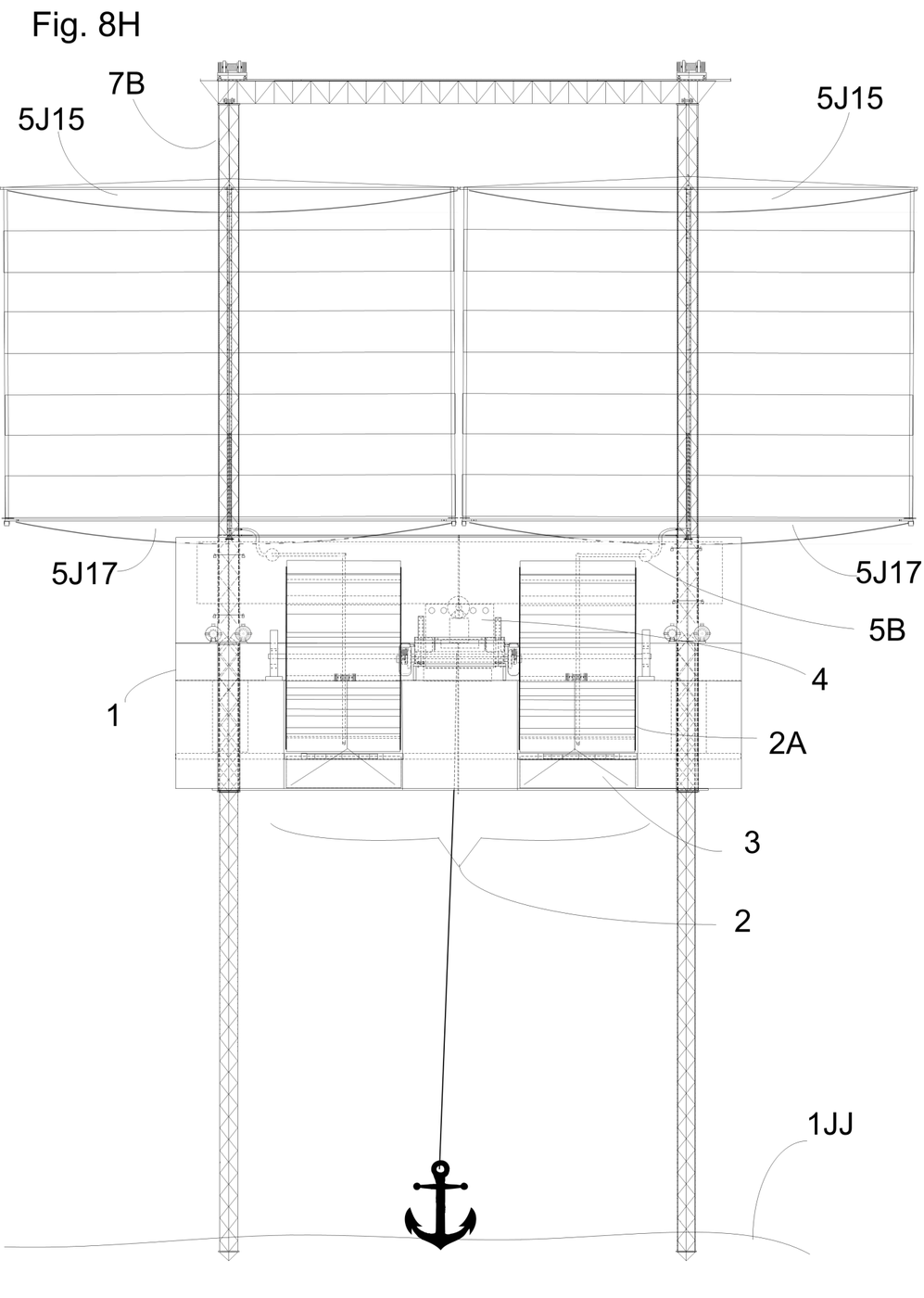
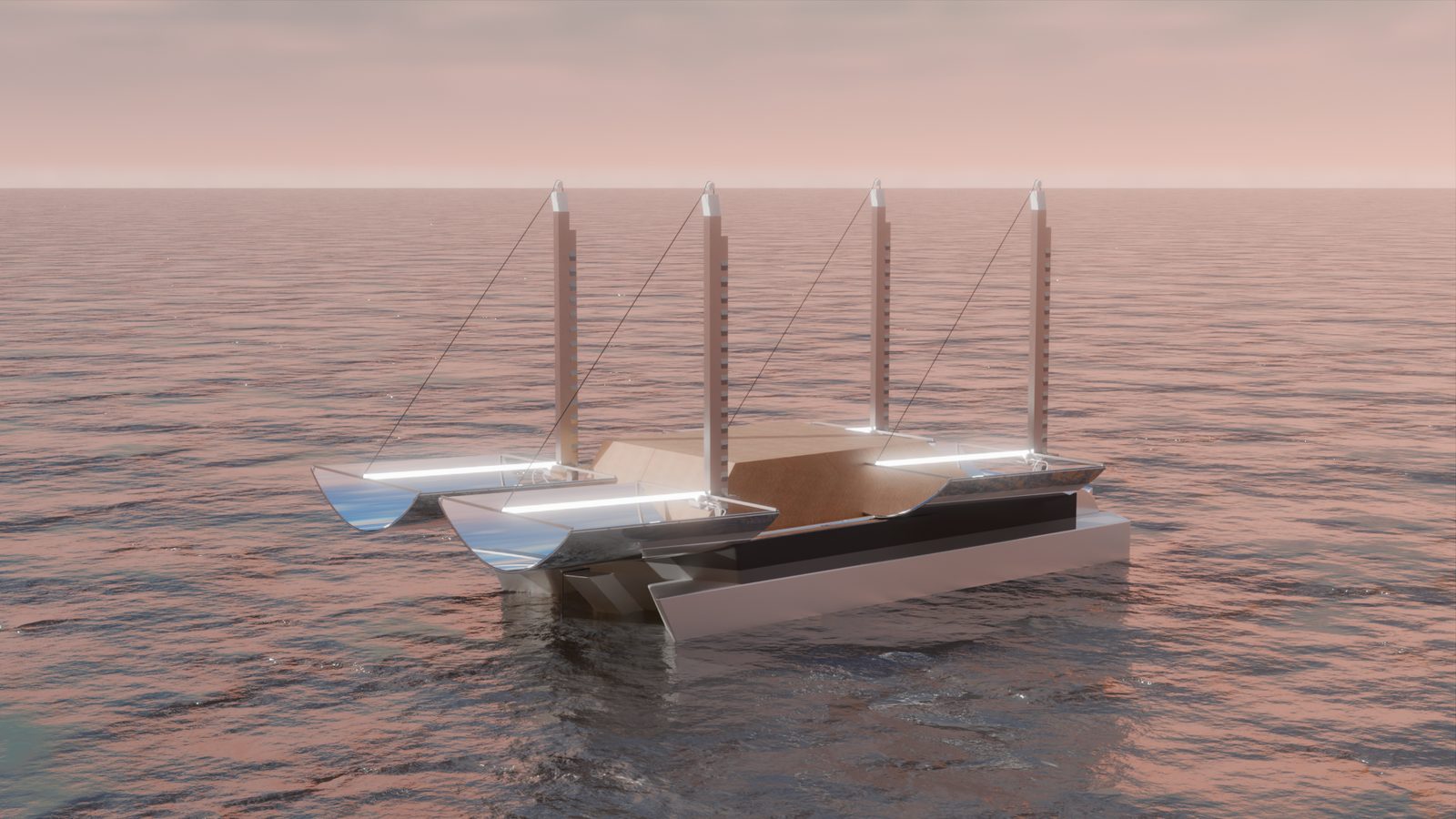
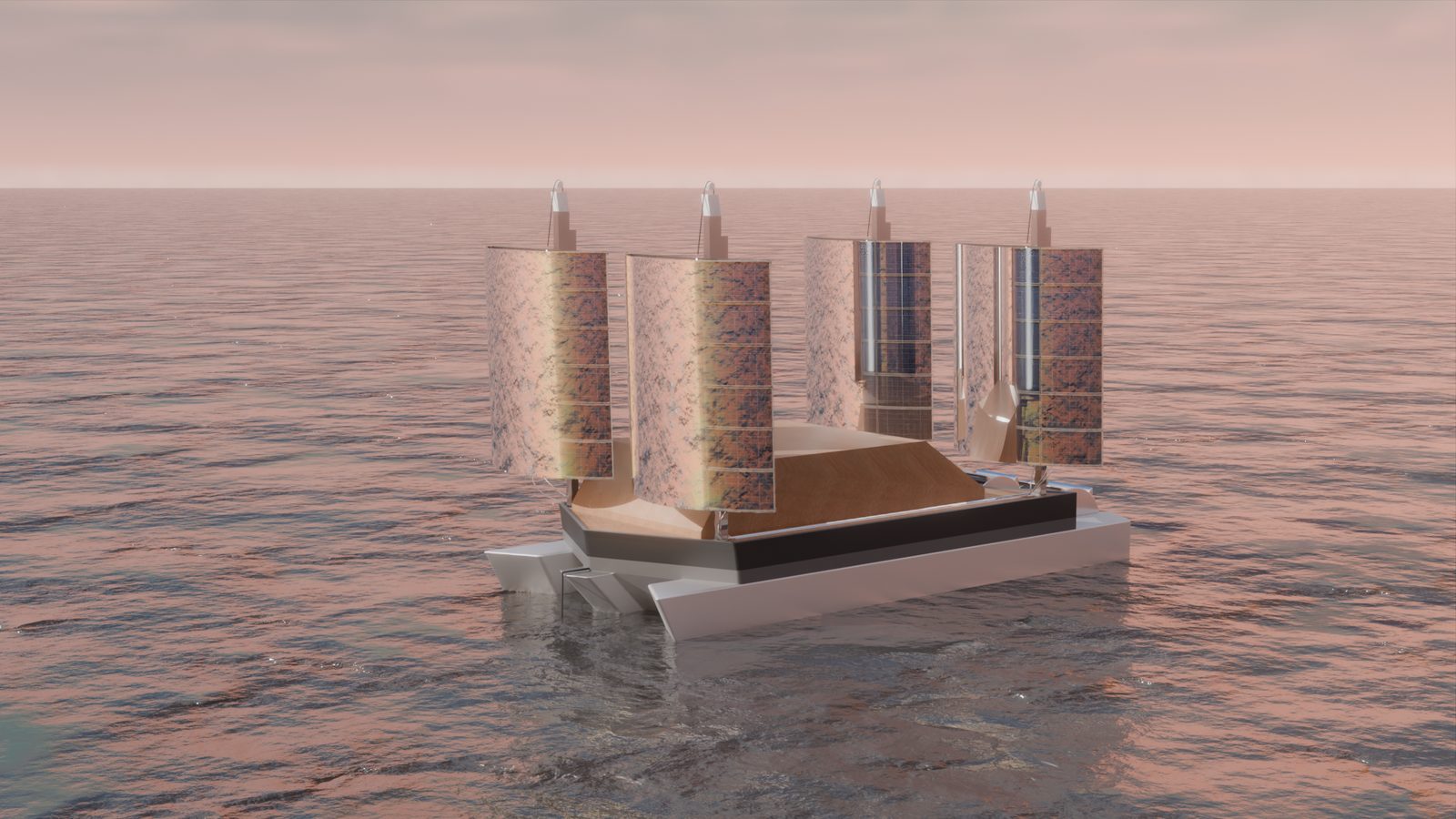
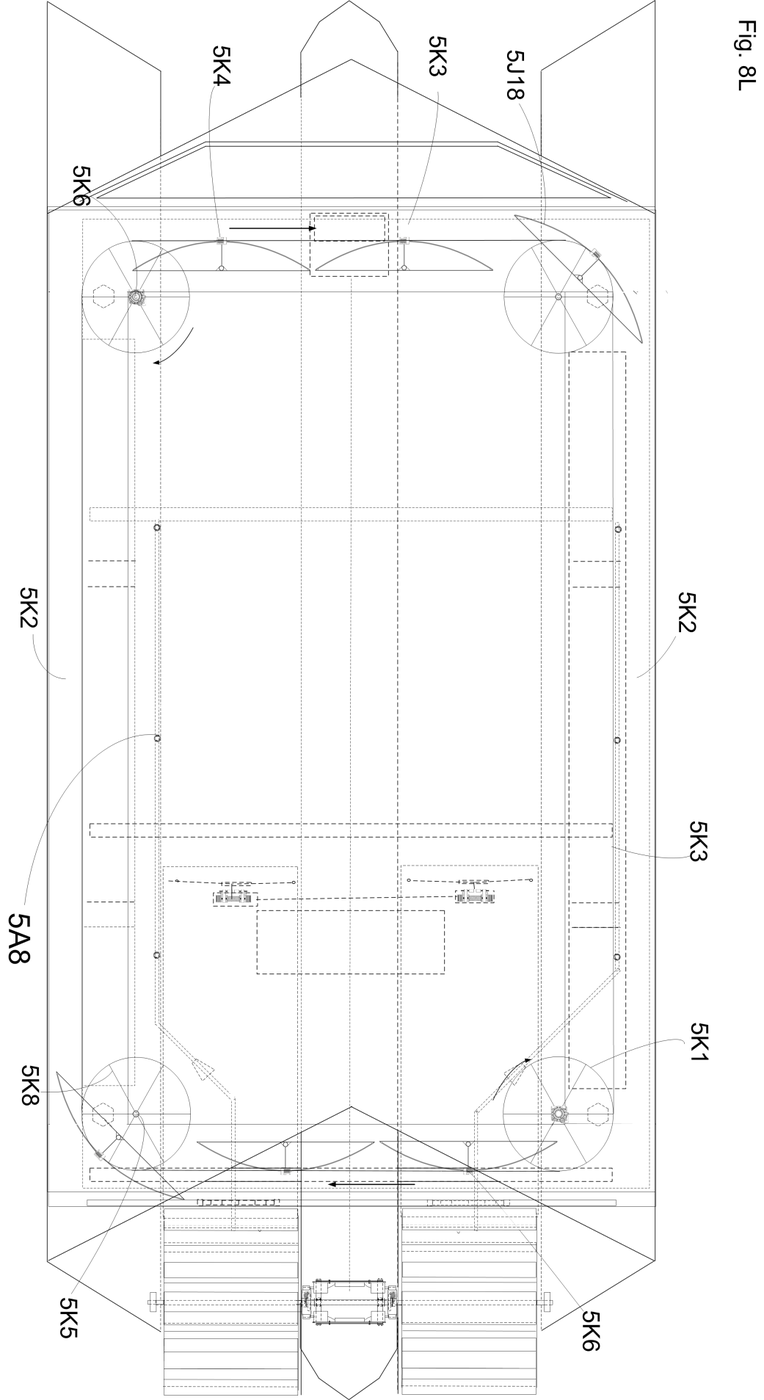
Large parabolic sails on the mast frame can catch wind, or be set flat and used as solar-thermal troughs that heat a collector pipe to make steam. Because both wind and sunlight scale with the area exposed, a bigger sail gains on both. Builders who only want the wheels can leave the sails off entirely.

  • Shared parts: the same masts and frame carry the sails.
  • Workshop-made ribs: the parabolic ribs are cut from flat bar on a simple jig, with no moulds.
  • Storm-ready: the sails can be lowered when conditions turn rough.
Fig. 8H: Sails raised, platform anchoredFig. 8H: Sails raised, platform anchored
Beyond electricity: surplus energy aboard can be put to work. The design anticipates using it to make fuels and other energy-intensive products on the platform itself, so a GEM can also act as a floating workshop or small factory. This part is a longer-term idea, not a requirement.

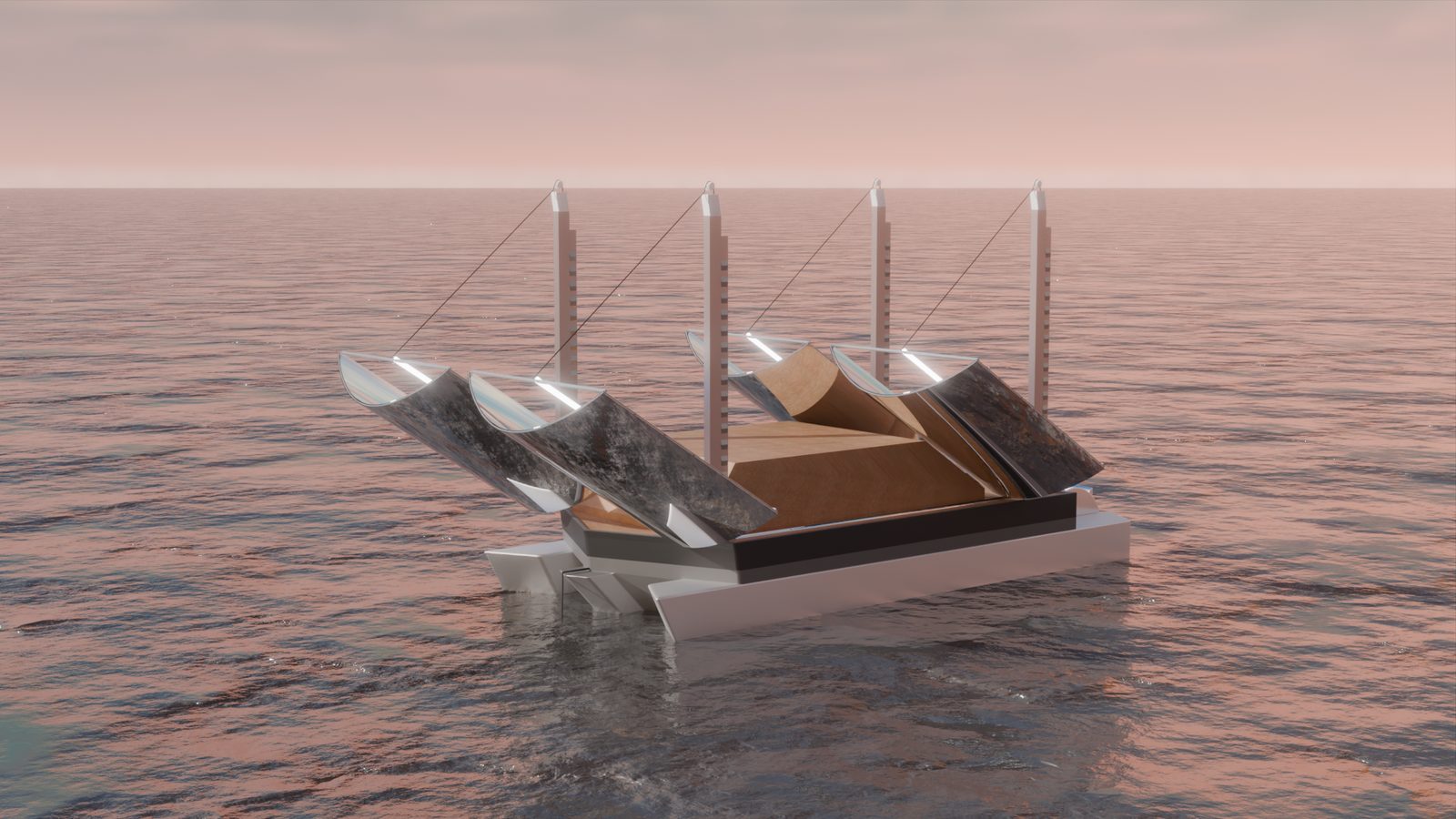
Concept Renders

Artist’s impressions of the platform with its optional systems. Click to enlarge.

Concept renders. Details differ from the drawings, and the renders are not engineering models.

Concept Animation

AI-generated concept animation, shown to convey the idea of the platform under way. The styling differs from the drawings and the living space is not depicted.

Intellectual Property

Patent Pending

The Green Energy Machine is patent pending.

Design Features
• Split octet-truss hulls
• Twin water-wheel power unit
• Telescoping mast / anchor legs
• Optional solar-thermal sails
• Modular trimaran / catamaran layouts

Interested in building or licensing?

We are open to conversations with builders, housing providers, communities and investors.

Start a Conversation

Descriptions are conceptual and reflect the design as filed. No performance, cost or regulatory approval is claimed; floating dwellings are subject to local building, marine and zoning rules.